
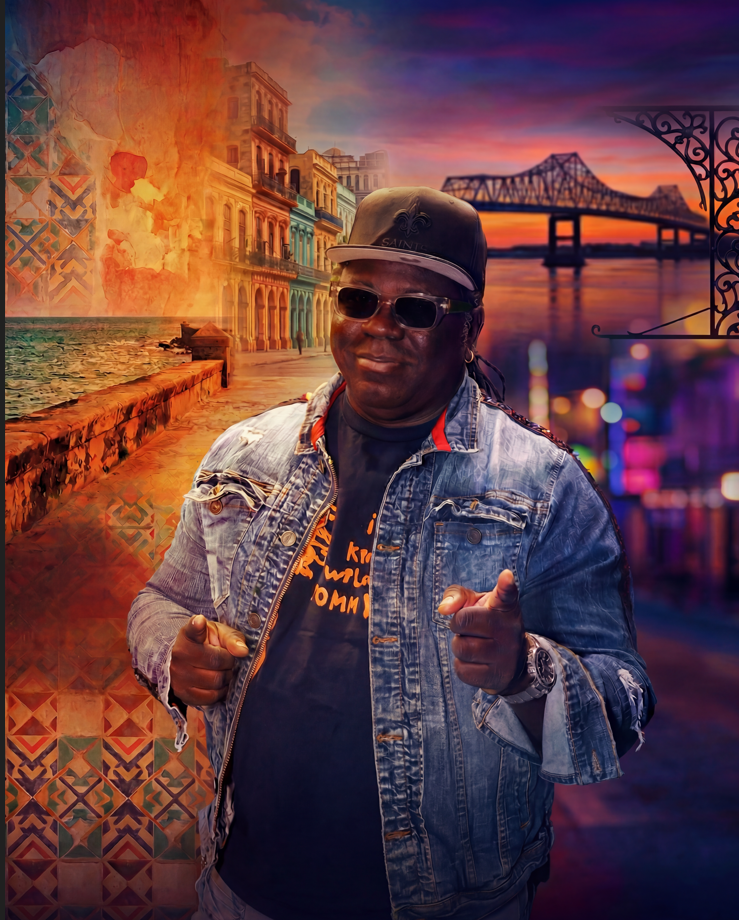

Percussionist, composer, and musician Alexey Marti does not just play instruments; he prescribes remedies for the soul. In his self-definition as a “doctor of feelings,” Martí encapsulates a mission that brought him to New Orleans: to be a cultural bridge, a link between his training in Havana and the rhythmic fervor of African-American culture.
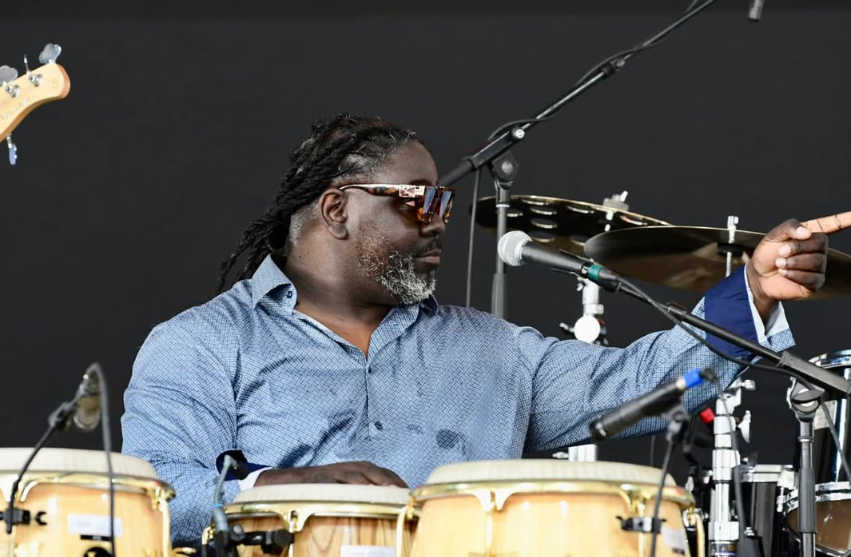
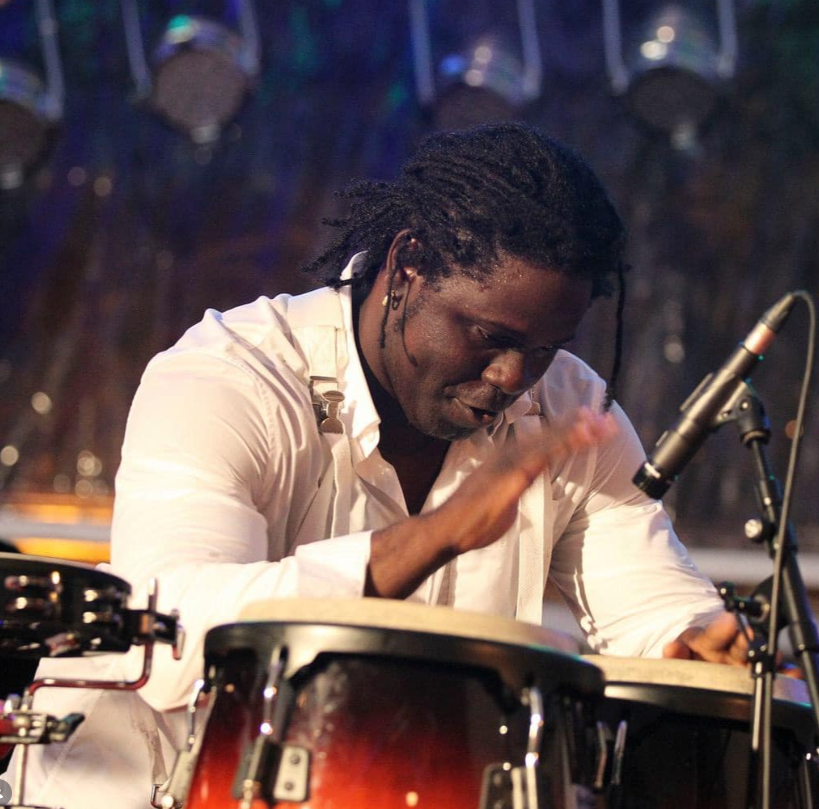
For Marti, percussion is a science and a never-ending quest. It is a “mathematical equation that tries to find the solution,” an exercise in “musical anthropology” that compels him to be a “walking library.” This mastery is evident in his deep exploration of the rhythms of Brazil, Cuba, and the roots of Africa—a knowledge that allows him to trace a path from the “south to the north” in his work. His repertoire is an elegant fusion where the romantic bolero intertwines with the vibrant son cubano and the cadence of samba, demonstrating a connoisseur’s quality that challenges the traditional borders of Latin music.
This ambition for excellence crystallizes in his upcoming album, “I Know What You Want”, due out in May. After six years of meticulous work, this project is the ultimate expression of his search for his “best version.” The album is a powerful tribute to R&B music and the legends of black American culture, revealing Martí’s deep connection to this American tradition. By daring to reinterpret the sounds of icons like Michael Jackson, Prince, Stevie Wonder, Cool and the Gang, and Lionel Richie, Martí not only pays homage but also positions himself as a high-caliber artist in any genre. This audacity is underscored by the collaboration of several artists, including vocalists Mark Kibble and Joe, members of the legendary vocal group Take Six, adding a layer of sophistication and authenticity to his vision.
His commitment to authentic art is unwavering: “I don’t make records just to say I made a record; I do it because I have something to say, and I am very serious about it.” This approach leads him to move away from “high-consumption and very volatile” music, convinced that “there will always be space for people who make real art.”





Marti’s impact in New Orleans extends beyond his recordings. He has forged deep ties in the local scene, playing and touring with figures like Herlin Riley and percussionist Bill Summer, whom he considers paternal figures. He has also found brotherhood in Big Sam of Funky Nation, who is also featured in a song on his new work. Furthermore, Martí finds daily inspiration in the continuity of the New Orleans sound, in his frequent performances across various venues in the city, and even when crossing the Crescent City bridge and witnessing the power and grandeur of the Mississippi itself.
Leah Chase Kamata, the influential local artist, nicknamed him the “link from Cuba” that had been lost and that he found in the city. The immediate future is an extension of his rhythmic bridge: after Jazz Fest in New Orleans, he will take his sound to Switzerland again in Ascona and then to Italy, continuing his collaboration with the New Orleans Jazz Orchestra. He tells us in secret about a future project that includes a popular and modern rhythm, for which he already has a name that nods to the sugar cane crops present in Cuba and New Orleans. Through his evolution and exploration of his works, we understand that Alexey Martí cannot be pigeonholed and that he manages to consolidate himself as an artist who is not afraid to explore new genres, always maintaining the roots and rigor of a master.
To learn more about the artist, find out about his performances, and enjoy his music, visit alexeymarti.com.